

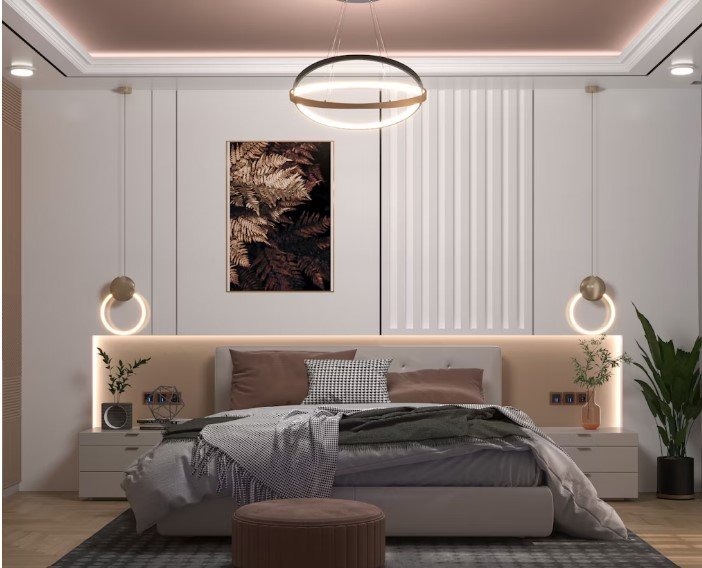
What’s the difference between a house that’s merely “fine” and one bursting with personality? It’s all in the details, and nothing pulls its weight quite like lighting up your wall art. The right lighting won’t just flatter your paintings, photos, or sculptures; it will turn your space into a gallery, minus the snooty curators and velvet ropes.
But before you point a lamp at your favourite artwork and call it a day, remember: lighting art is an art in itself (yep, art-ception). It’s a little science, a little style, and a big helping of common sense. The secret? Picking the ideal fixtures to suit both your masterpiece and your home’s personality.
Lighting Techniques for Different Types of Art
Oil Paintings
Oil paintings aren’t exactly low-maintenance (which only adds to their charm). With their textured layers and aversion to heat, they deserve careful attention. Hang your lights at a 30-degree angle if you want to avoid glare and showcase those brushstrokes without exposing your Monet to a UV roast. Direct, harsh lighting can make your art glisten in all the wrong ways – or worse, do permanent damage. Channel your inner spa manager: soft, even, and gentle is the goal.
Shiny varnish will reflect more, so squint and check for extra glow. If yours is matte, you’ve got it easier, but don’t get lazy with your positioning.
Photographs
Photographs framed behind glass are notorious for turning into unwanted mirrors once the lights go on. The solution? Step away from the straight-on lighting and aim for a 25-30 degree angle. You’ll sidestep the glare and help every pixel shine as it should.
Consider sliding those lights a bit off centre, too. This trick adds dimension without launching a selfie attack every time someone walks by. You’ll capture the image, not your own startled reflection.
Sculptures
Sculptures are the extroverts at your art party – they love attention from all sides. Don’t bother with just one beam of light; real depth comes from lighting that hits from multiple directions. Try ‘grazing’ (lights that skim along the surface) for a level of drama worthy of the Louvre.
Get playful with shadows and angles until your sculpture is more “masterpiece” and less “mystery blob.” A little tinkering here pays off, revealing textures and dimensions you didn’t know you had.
Choosing the Right Fixtures
Spotlights
Craving precision? Spotlights were made for you. They command attention, focusing light (and admiration) directly on your art, not your sofa. Adjustability is their thing – just be sure you set the mood, not an interrogation scene. Overdo it, and the resulting shadows will rival a midnight noir film.
LED spotlights are the new standard – tweak the colour temperature to match your art or the vibe of the room, and feel smug about your lighting IQ.
Track Lighting
If your art habit is less “carefully curated” and more “ever-expanding,” track lighting will be your best ally. It’s a shape-shifter, letting you move, angle, and adjust fixtures as your collection grows faster than you anticipated. Perfect for gallery walls, tricky corners, or if you just like rearranging every other weekend.
It’s all about flexibility, so every artwork gets its moment. Just brace yourself: more art means more gifts at the next family gathering.
LED Strips
For those who prefer their flair with a side of subtlety, LED strips are a quiet revolution. Stick them behind frames, along shelves, or anywhere you want a soft, consistent glow. Efficient, discreet, and modern, they deliver ambiance without a neon sign screaming “look at me!”
If you’re after a star performer for that one masterpiece, LED strips will play backup. But layer them thoughtfully, and you’ll conduct a symphony of mood lighting.
Creating Your Perfect Gallery Space
The right lighting from https://lightsandlamps.com/collections/rechargeable-lamps and beyond can nudge your room from “meh” to “marvel,” all while keeping your beloved art safe and looking its absolute best. Whether it’s the punch of a spotlight, the adaptability of track lighting, or the whisper of LED strips, the magic is in mixing thoughtfully.
Start with one technique, then experiment and layer like a confident curator. Before you know it, your art – and your space – will be basking in the spotlight!